We've Shipped 20+ MVPs. Here's What Actually Launches in 12 Weeks (And What Doesn't).
Most SaaS MVPs take 6 months and $80K before anyone sees a login screen. We break down realistic costs, timelines, and the scope decisions that separate MVPs that ship from ones that die in development.


A founder came to us last year with a 47-page product requirements document. Feature lists, user stories, integration specs, an admin dashboard with 14 different report types. He'd been working on the PRD for three months. He wanted us to build it all before launch.
We told him to delete 80% of it.
He pushed back. Every feature was "critical." Every integration was "day one." The admin dashboard needed all 14 reports because "investors will want to see them."
We built the 20% he actually needed. The product launched in 11 weeks. Within two months, he had 340 paying users — none of whom ever asked for 12 of those 14 reports. The features his users actually wanted? Half of them weren't in the original PRD at all.
That story repeats itself with almost every founder we work with. The hardest part of building an MVP isn't the engineering. It's convincing yourself that less is more.

What an MVP Actually Means in 2026
The term MVP has been stretched so far it barely means anything. Some founders use it to mean "version 1.0 with every feature I can think of." Some investors use it to mean "a landing page with a waitlist." Neither definition is useful.
Here's ours: an MVP is the smallest product that lets you charge real money from real users and learn whether your core value proposition works.
Charge real money. Not "free beta with premium coming soon." Not "we'll monetize later." If people won't pay for it today, adding more features won't change that. Charging money is the most honest feedback mechanism that exists.
Real users. Not your friends. Not your investors. People who found your product because they have the problem you're solving and are willing to pay for a solution.
Core value proposition. The one thing your product does that makes someone's life measurably better. Not five things. Not a platform. One thing, done well enough that people pay for it.
The Realistic Cost Breakdown
Every "how much does an MVP cost" article on the internet gives ranges so wide they're useless. "$5,000 to $500,000 depending on complexity." Thanks for nothing.
Here's what things actually cost when you're building a production-quality SaaS MVP with a professional team:

The Components
Authentication and user management: $500-$1,500. Login, registration, password reset, email verification, role-based access. This is table stakes and it's not where you cut corners. We use Auth.js or Clerk depending on the project. Building auth from scratch is almost never worth it.
Core feature set (3-5 features): $3,000-$12,000. This is the heart of your product — the thing that delivers your value proposition. The range depends entirely on complexity. A scheduling tool is simpler than an analytics dashboard which is simpler than a real-time collaboration system.
Payment and billing: $500-$2,000. Stripe integration, subscription management, usage tracking if applicable, invoicing. Don't build this yourself. Stripe handles the hard parts. You're paying for the integration and the billing logic.
Admin panel: $500-$2,000. User management, basic analytics, content management if applicable. Keep this minimal for MVP. You don't need 14 report types. You need to see who signed up, who's paying, and what's broken.
UI/UX design: $1,500-$5,000. Not just "making it look nice." Research-informed design that reduces friction, increases conversion, and makes the product intuitive enough that you don't need a tutorial video. This is where most MVPs that look cheap actually are cheap — and it shows in conversion rates.
Infrastructure and DevOps: $500-$1,500. Cloud hosting setup, CI/CD pipeline, monitoring, staging environment. You need this from day one. Deploying manually to a single server is technical debt that compounds fast.
The Total
| Scope | Timeline | Cost Range |
|---|---|---|
| Simple MVP (1-2 core features, basic UI) | 6-8 weeks | $5,000-$12,000 |
| Standard MVP (3-5 core features, polished UI) | 8-12 weeks | $12,000-$25,000 |
| Complex MVP (AI features, real-time, integrations) | 12-16 weeks | $25,000-$50,000 |
These numbers assume a professional development team. Not a single freelancer. Not an agency billing $200/hour for a junior developer. A team with a technical lead, 1-2 full-stack developers, and a designer who work together daily.
Can you build cheaper? Yes. You can hire offshore developers for $15/hour and get something that technically works. We've rebuilt enough of those projects to know what that decision costs 6 months later.
Can you build more expensive? Absolutely. Enterprise development shops will quote $100,000+ for the same scope. You're paying for their overhead, not better code.
The 12-Week Timeline That Actually Works
We've refined this over 20+ MVP builds. Here's what a realistic 12-week timeline looks like.
Weeks 1-2: Discovery and Design

This is the most important phase and the one founders most want to skip. Two weeks feels like wasted time when you want to start building. It's not. It's the phase that prevents you from building the wrong thing for three months.
Week 1: Requirements deep dive. We sit with you and tear apart your feature list. For every feature, we ask: "If we launch without this, will users refuse to pay?" If the answer is no, it's post-launch. We also map the user journey — from signup to first value moment. If that journey takes more than 3 steps, we simplify it.
Week 2: Design sprint. Wireframes for every screen. User flow diagrams. Design system setup — typography, colors, components. We don't do mockups that look pretty but ignore usability. We test the flow before a single line of code is written. Changes in Figma cost nothing. Changes in code cost weeks.
Deliverables: PRD (the real one, usually 3-5 pages), wireframes, user flows, technical architecture document, database schema.
Weeks 3-8: Development

This is where the work happens. We run two-week sprints with weekly demos. You see working software every week, not just progress reports.
Sprint 1 (Weeks 3-4): Foundation. Authentication, database setup, core API structure, CI/CD pipeline, basic layout and navigation. By the end of week 4, you can log in to your product and see real pages, even if they're mostly empty.
Sprint 2 (Weeks 5-6): Core features. The 2-3 features that deliver your primary value proposition. This is the most intensive sprint and where most of the product decisions happen. We push for feature-complete by end of week 6, even if it's rough around the edges.
Sprint 3 (Weeks 7-8): Payment, polish, and remaining features. Stripe integration, onboarding flow, responsive design, edge case handling. By end of week 8, the product is functionally complete.
Weeks 9-10: Testing and Iteration
Beta testing with 10-20 real users. Not fake users. People who match your target customer profile. We watch them use the product (with permission), track where they get confused, and fix the friction points.
This phase almost always reveals something surprising. Features you thought were obvious turn out to be confusing. The thing you almost cut turns out to be the most-used feature. The onboarding flow that made sense to you makes zero sense to someone seeing the product for the first time.
Weeks 11-12: Launch Preparation
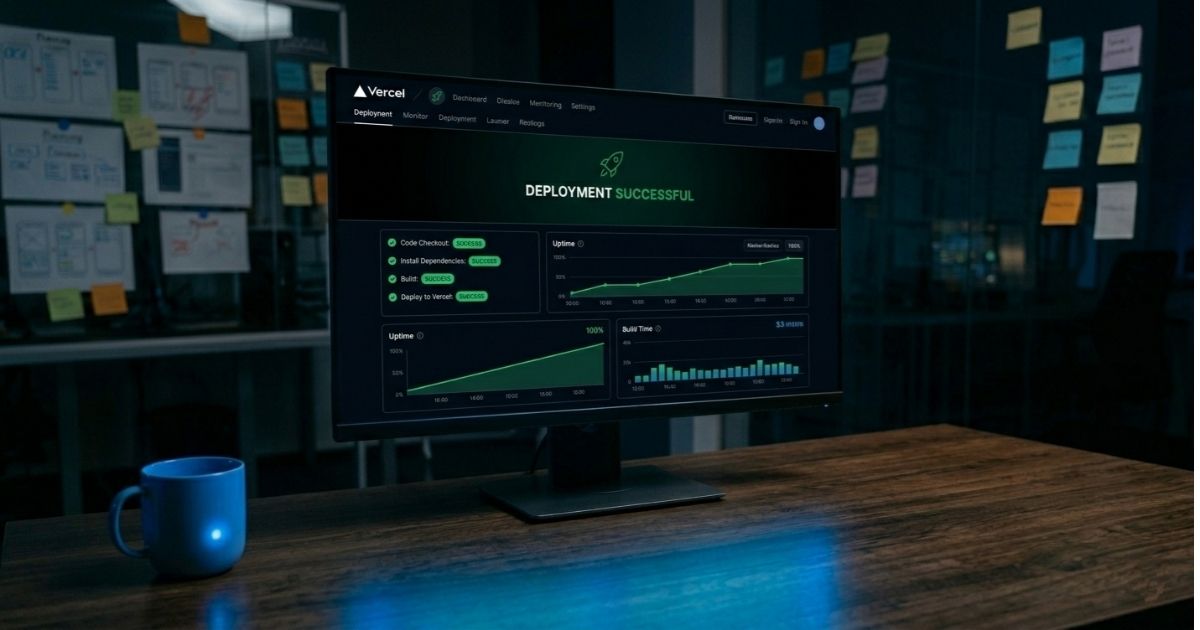
Performance optimization, security audit, monitoring setup, DNS configuration, error tracking, analytics integration, and the launch itself.
We don't do "soft launches" that drag on for months. Pick a date. Hit the date. The product will have bugs. That's normal. What matters is that the core experience works and you have monitoring in place to catch issues fast.
Deliverables: Production deployment, monitoring dashboards, 30 days of post-launch support, documentation for your team.
The Tech Stack Decision
Founders ask about tech stack more than any other technical question. Here's our honest answer: for 90% of SaaS MVPs, the tech stack matters far less than you think.
That said, we have a default stack and reasons for each choice:
Frontend: Next.js + React. Server-side rendering for SEO. App Router for clean code organization. React's ecosystem means every UI problem has a proven solution. TypeScript for catching bugs before they reach users.
Backend: Node.js (within Next.js) or separate API. For most MVPs, Next.js API routes handle the backend cleanly. When we need a separate API — for real-time features, heavy computation, or microservice architecture — we use Node.js or Python depending on the domain.
Database: PostgreSQL. Reliable, scalable, free. Handles JSON data well enough that you don't need a separate document store for most use cases. We use Prisma as the ORM because it catches schema mismatches at build time.
Auth: Auth.js or Clerk. Auth.js for cost-sensitive projects (free, self-hosted). Clerk for speed (managed service, pre-built components). Never roll your own auth.
Payments: Stripe. There is no second choice.
Hosting: Vercel or AWS. Vercel for Next.js projects that benefit from edge deployment. AWS for projects that need more infrastructure control.
AI (if applicable): OpenAI API + vector database. GPT-4o for most use cases. Pinecone or pgvector for embeddings and semantic search. We abstract the AI layer so you can swap providers without rewriting your application.
Could you use a different stack? Of course. Django, Rails, Laravel — all fine choices. The point isn't that our stack is the only option. The point is that choosing a stack and committing to it is better than deliberating for weeks.
Five Decisions That Kill MVPs Before Launch
1. Building Features Nobody Asked For
The most expensive mistake and the most common. Every feature you build that nobody uses cost you money and time that could have gone toward features they actually want. The solution is brutally simple: talk to potential users before you build. Not surveys. Conversations. "Would you pay $50/month for a tool that does X?" If 7 out of 10 say yes, build X. If they say "well, it depends..." — you don't have product-market fit yet.
2. Chasing Perfect Design Before Launch
Pixel-perfect design is for version 2. Your MVP needs to be clean, functional, and professional — not award-winning. We've seen founders delay launch by 6+ weeks over font choices and animation timing. Your users care about whether the product solves their problem, not whether your loading spinner has the right easing curve.
3. Over-Engineering the Architecture
"But what if we get 100,000 users?" You won't. Not in the first month. Build for the scale you actually need — hundreds to low thousands of users. PostgreSQL on a single server handles that with room to spare. You can refactor for scale when you have the revenue to justify it and the data to know what needs scaling.
4. Trying to Build a Platform on Day One
"It's not just a tool, it's a platform." Every founder says this. None of them need a platform on day one. Build the tool first. Prove people want it. Then add the marketplace, the API, the integrations, the white-label option. Platforms are built on top of products that already work, not designed from scratch.
5. Ignoring Distribution Until After Launch
We see this constantly: teams spend 12 weeks building a product and zero weeks figuring out how anyone will find it. Distribution isn't a post-launch problem. It's a pre-launch requirement. Before you write code, you should know: where do your target users hang out? What search terms are they using? How will you reach your first 100 users? If you can't answer those questions, the best product in the world won't save you.
What Happens After Launch
Launch isn't the finish line. It's the starting line. Here's what the first 90 days after launch should look like:
Days 1-30: Bug fixes, user feedback, and analytics review. You'll find bugs you missed. Users will request features you didn't expect. Your analytics will show you where people drop off. This is the most valuable learning period. We include 30 days of post-launch support for exactly this reason.
Days 31-60: First iteration cycle. Based on real user data — not assumptions — decide what to build next. This is where the features you cut from the MVP get re-evaluated with actual evidence. Some come back. Most don't.
Days 61-90: Growth optimization. Improve onboarding conversion. Reduce churn. Add the integrations that your paying users are actually requesting. Start thinking about your pricing model — your MVP pricing was a guess, and now you have data to refine it.
Real Numbers From Projects We've Shipped
We're not going to share client financials, but we can share patterns:
Sonoria — AI voice assistant SaaS. Shipped in 12 weeks. The founder's original PRD included a custom CRM, an analytics suite, and a mobile app. We launched with the core voice AI engine, a simple dashboard, and Stripe billing. Users didn't ask for the CRM. They asked for better call transcription accuracy. That feedback shaped the next three months of development.
MomentPik — AI photo sorting platform for event photographers. The MVP focused on one workflow: upload photos, AI sorts by bib number, customers purchase. The founder wanted watermarking, custom storefronts, and a photographer marketplace. We launched without any of those. The sorting accuracy and purchase flow were what mattered. The marketplace came six months later, after the core product proved itself.
KodeReach — Sales outreach command center. Complex product with multiple AI components. We scoped the MVP to one workflow: import prospects, generate personalized email sequences, track engagement. The founder's full vision included LinkedIn outreach, phone dialing, and lead scoring. All of those came later, funded by revenue from the email product that shipped first.
The pattern: launch with the smallest thing that delivers value, learn from real users, and build the rest with revenue and evidence.
One Takeaway
The fastest path to a successful SaaS product isn't building more features. It's building fewer features, charging money from day one, and letting real users tell you what to build next.
Every week your MVP stays in development is a week you're not learning from the market. The product you launch will be imperfect. That's the point. Perfection is the enemy of learning, and learning is the only thing that turns an idea into a business.
Twelve weeks. Three to five core features. Real users paying real money. That's the MVP that works.
We've shipped 20+ SaaS MVPs for startups and enterprises. If you're planning a product and want a realistic timeline, scope, and budget — book a free strategy call. We'll review your concept and tell you what can ship in 12 weeks and what should wait for version 2.