80% of AI Projects Fail. Here's What the Other 20% Do Differently.
Companies spent $684 billion on AI in 2025. Over $547 billion of it was wasted. We break down which AI automation use cases actually return money — and why most don't.


Last year, Commonwealth Bank of Australia fired 45 customer service reps and replaced them with an AI voice-bot. Call volumes went up, not down. The remaining staff worked overtime to clean up the mess. Within months, the bank reversed the decision publicly.
Most AI failures don't make the news. They get buried in quarterly write-offs and vague earnings call language about "strategic pivots." But the numbers tell the story clearly enough: global enterprises invested $684 billion in AI in 2025, and over $547 billion of that failed to deliver its intended value. That's an 80% failure rate, according to Pertama Partners' analysis of enterprise AI deployments.
An MIT report from August 2025 put it even more starkly — 95% of generative AI pilots fail to produce a single dollar of measurable return.
So why are we writing a guide about AI automation? Because the 20% that works, works extremely well. We've built AI systems for 30+ clients over the past two years, and the pattern is consistent: narrow scope beats ambition, measurement beats vibes, and the boring use cases outperform the flashy ones every time.
The Gap Between "Using AI" and Getting ROI From It
Here's something that doesn't get discussed enough: 68% of small businesses now say they "use AI." But dig into what that actually means and it's mostly people pasting text into ChatGPT a few times a week. That's not a strategy. That's a browser tab.
The businesses seeing real returns have done something different. They've identified a specific, repetitive, high-cost process and automated it with enough structure that it runs without constant babysitting. That last part matters more than people think. We've seen plenty of companies build automations that technically work but require so much human review and approval that they create more work than they eliminate. Entrepreneur magazine calls this the "automation illusion," and it's the single most common trap we see in practice.
The use cases that consistently pay back share three traits:
The process was already well-defined before AI touched it. If your team can't explain the steps on a whiteboard, an AI system won't magically figure them out.
There's a clear cost to doing it manually. We're talking real numbers. Hours per week multiplied by loaded labor cost. If you can't calculate what the problem costs today, you can't measure whether AI solved it.
The failure mode is survivable. The best first AI projects are ones where a wrong answer is annoying, not catastrophic. Customer service triage, not medical diagnosis. Invoice processing, not regulatory filings.
Four Categories That Consistently Deliver
We're not going to claim AI fixes everything. Most of what gets pitched to businesses is either too early, too expensive, or too fragile for production. But these four categories have proven themselves across enough deployments that we're comfortable saying: if you match the profile, the payback is real.
Voice AI

Voice AI in 2026 is genuinely different from what existed two years ago. Modern systems handle natural back-and-forth conversation, not just keyword matching. They book appointments, answer common questions, qualify leads, and know when to hand off to a human.
The math works when you're spending $5,000 or more per month on phone-based customer service or appointment scheduling. We've seen 60% reductions in operational overhead for inbound call handling, with response times dropping from 45+ seconds (hold queues) to 3-5 seconds.
But you have to go in with realistic expectations. The Commonwealth Bank story isn't unique. Taco Bell deployed voice AI to 500+ drive-throughs and it became a viral failure when a customer "ordered 18,000 cups of water" and the system accepted it. The lesson isn't that voice AI doesn't work. The lesson is that replacing your entire team on day one is a terrible implementation strategy.
Start with after-hours calls. Or overflow during peak times. Let it handle the simple stuff while humans handle the rest. Scale from there based on actual data, not vendor promises.
AI Chatbots
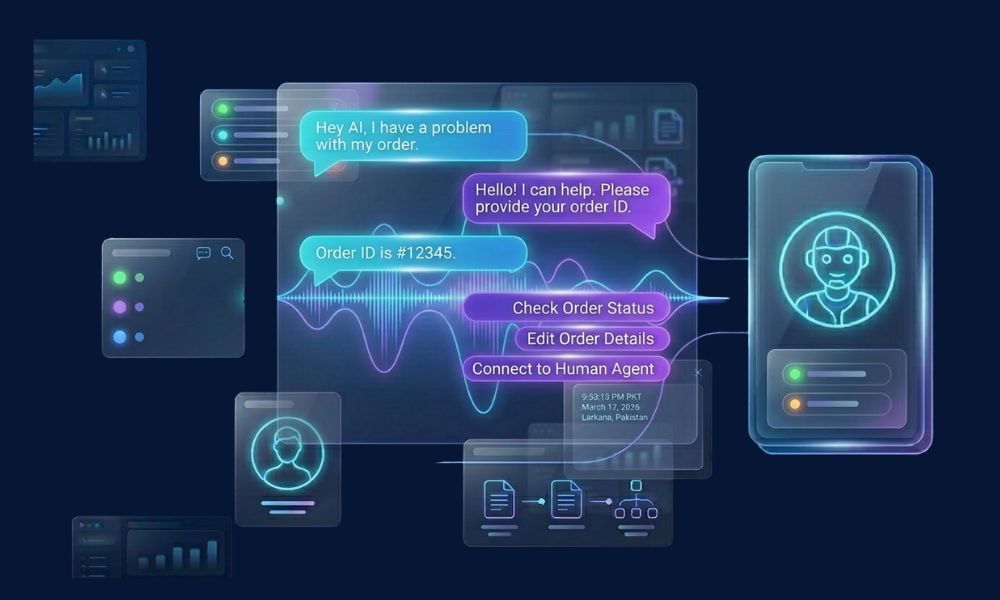
The chatbot market is projected to hit $7.09 billion this year, which means there's a lot of money chasing a lot of bad implementations. But the good ones are genuinely impressive.
Modern chatbots use LLMs grounded in your actual business data. They read your docs, your knowledge base, your past tickets, and they answer questions with source citations. When done right, the results are measurable: 30-40% reduction in support ticket volume, with industry benchmarks showing 148-200% ROI within 12 months.
The critical factor is grounding. A chatbot without proper retrieval-augmented generation (RAG) will confidently make things up. We call this the "helpful liar" problem. The quality of your knowledge base is the ceiling for your chatbot's quality. If your docs are outdated, contradictory, or incomplete, your chatbot will be too.
The best results come from SaaS products with repetitive support tickets, e-commerce with high pre-purchase question volume, and any business where customers struggle to find answers in existing documentation.
If you're handling fewer than 50 support conversations a day, a chatbot probably isn't worth the implementation cost yet. That's not a popular opinion among chatbot vendors, but it's honest.
Document Processing
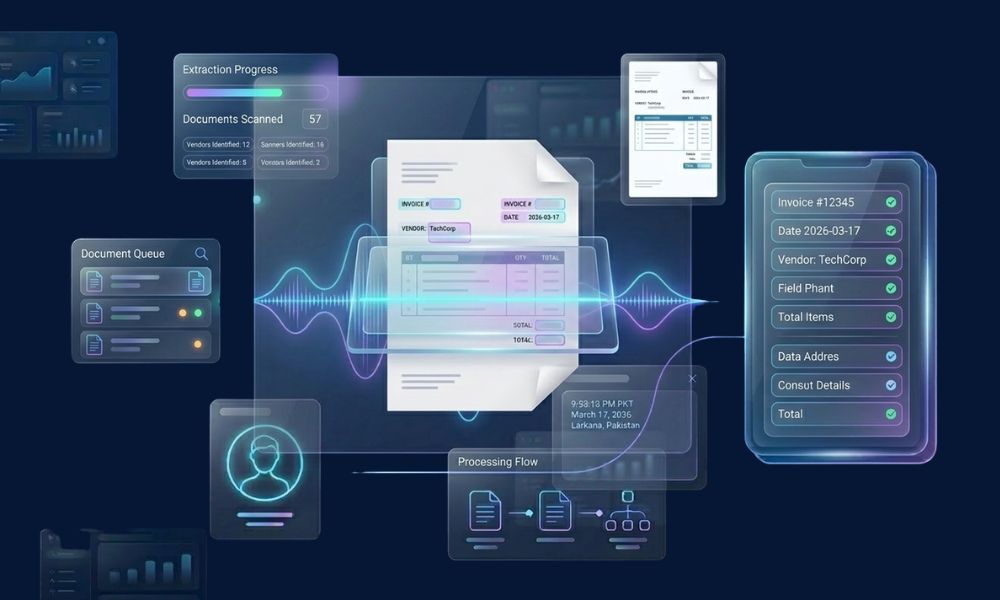
This is the least exciting category and probably the most reliable one. Extracting structured data from invoices, contracts, forms, and reports is tedious, error-prone, and expensive when done manually. AI document processing handles extraction, classification, and validation automatically.
Multi-modal AI models have changed this space significantly. Modern platforms handle mixed-format documents — scanned PDFs, photographs of receipts, handwritten forms — at accuracy rates that clear straight-through processing thresholds. The definition of "document" is expanding too: voice transcripts, email threads, and chat logs all feed into these pipelines now.
The math works when you're processing 500+ documents per month. We've seen 80-90% reductions in manual data entry time, with 95%+ extraction accuracy and a human-in-the-loop for edge cases.
The payback period is typically 3-6 months. It's not glamorous. Nobody writes breathless LinkedIn posts about invoice processing. But it works.
Workflow Automation with AI Agents
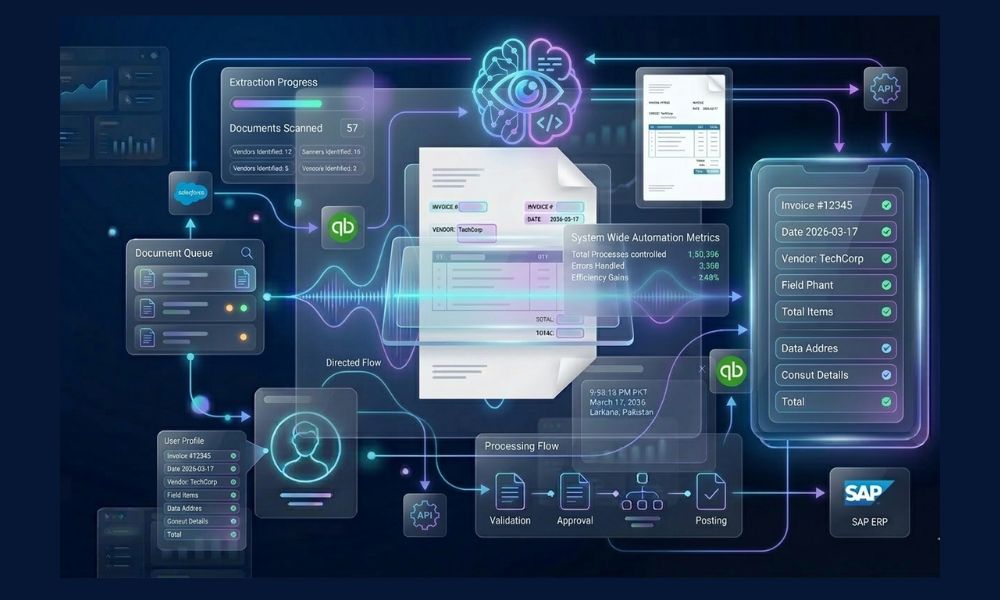
This is the fastest-growing category and the one with the widest range of outcomes. AI agents connect your tools — CRM, email, Slack, databases — and make decisions about routing, prioritization, and response.
Gartner predicts 40% of enterprise applications will feature task-specific AI agents by the end of this year, up from less than 5% in 2025. That's aggressive growth, and frankly, we think a lot of those deployments will fail. Over 40% of agentic AI projects may be canceled by 2027 without proper governance frameworks, according to the same Gartner report.
The ones that work share a common trait: they automate processes where the decision logic is clear, even if the data inputs are messy. Lead routing based on company size and industry. Customer onboarding sequences triggered by specific actions. Report generation from multiple data sources.
We build most of our workflow automations on n8n because of its self-hosting capability, AI agent support, and the fact that a 20-node workflow costs the same as a 2-node workflow. But the platform matters less than the process design. A well-designed automation on Zapier beats a poorly designed one on n8n every time.
How to Evaluate Before You Build
Before committing budget to an AI project, run this assessment:
Quantify the manual cost. Hours per week multiplied by fully loaded hourly cost, multiplied by 52 weeks. If you can't calculate this number, stop here. You're not ready.
Estimate automation coverage conservatively. What percentage of cases can AI handle without human intervention? If a vendor tells you 90%, assume 60%. If they say 70%, assume 50%. We've been doing this long enough to know that the gap between demo performance and production performance is always wider than expected.
Factor in the real implementation cost. Development, integration, testing, data preparation (budget 30% of the project for this alone), training, and 3 months of babysitting the system before you trust it.
Calculate the payback period. Implementation cost divided by annual savings at your conservative automation coverage estimate. Under 6 months? Strong candidate. Under 12? Still worth it. Over 18 months? Reconsider unless you have strategic reasons beyond cost savings.
Why 80% Fail
The failure patterns we see repeat across industries:
They start too big. The companies that succeed deploy 62% of their AI initiatives to production. The ones that fail deploy 12%. The difference isn't talent or budget — it's scope. Successful teams start with one process, prove it works, then expand. Failed teams try to "transform" an entire department.
They skip the data work. AI is a mirror of your data quality. Companies budget for engineers and models but not for cleaning, organizing, and maintaining the data those models depend on.
They confuse a demo with a deployment. S&P Global found that 42% of companies abandoned most of their AI initiatives in 2025, up from 17% in 2024. The average organization abandoned 46% of proof-of-concepts before reaching production. Getting something to work in a demo is the easy part. Making it work reliably at 3 AM when nobody's watching is the actual job.
They treat AI as a replacement instead of an augmentation. The Commonwealth Bank approach — fire the humans, deploy the bot — almost never works on the first attempt. Start with human-in-the-loop. Let the AI handle 60-70% automatically and route the rest to humans. Expand automation coverage as confidence grows.
One Takeaway
The best first AI project isn't the most technically interesting one. It's the most painful manual process your team does today. Map it out. Calculate the cost. Build a focused proof of concept — 4 to 6 weeks, not 6 months. Measure what actually happens, not what a vendor's slide deck promised would happen.
Seventy-four percent of executives who deployed AI agents to production report achieving ROI within the first year. The gap between them and the 80% who fail isn't budget or sophistication. It's discipline: start small, measure honestly, and kill projects that aren't working before they become expensive mistakes.
We've built AI automation systems for 30+ clients across voice AI, chatbots, document processing, and workflow automation. If you're trying to figure out which use case makes sense for your business, book a free strategy call. We'll tell you honestly whether AI is worth it for your specific situation — and if it's not, we'll say so.