What the Claude Fable 5 Shutdown Means for AI Builders
The US government ordered Anthropic to disable Claude Fable 5 three days after launch. Here's the AI vendor risk every team building on frontier models just learned about the hard way.


On June 9, Anthropic shipped Claude Fable 5. Three days later it was gone. On June 12 at 5:21 p.m. ET the US government handed Anthropic a directive ordering it to disable Fable 5 and its bigger sibling Mythos 5 for every customer on earth. Not deprecated with a migration window. Switched off. If you wired a feature to that model on a Wednesday, it stopped answering on Friday. The Claude Fable 5 shutdown is the cleanest lesson in AI vendor risk anyone building on frontier models has gotten yet, and it has nothing to do with the model being bad.
Here's what actually happened, why it matters for your stack, and the four things we're changing on client projects because of it.
What got shut off, and why
Mythos 5 came first, disclosed on April 7 and held back from public release, given to roughly 50 vetted organizations. It was the most capable thing Anthropic had built. Fable 5 was the public version: same underlying architecture, extra guardrails meant to stop the dangerous use cases, released for everyone through the Claude API, AWS, and Microsoft Foundry on June 9.
The order that killed it was framed as export control. National security. On paper it targeted access by foreign nationals. The problem is you cannot filter foreign nationals out of a public API in real time, so the only way to comply was to turn the model off for everyone. Anthropic did. Opus 4.8 and the rest of the lineup stayed online, which is the one piece of good news in the whole story.
The reason, as far as anyone outside the room can tell, is a jailbreak. Anthropic described it as a narrow, non-universal jailbreak: a way to prompt the model into examining a codebase and finding exploitable software flaws. Amazon's security team reportedly flagged it, and that flag went up the chain to the White House. Anthropic pushed back in public, saying it disagreed "that the finding of a narrow potential jailbreak should be cause for recalling a commercial model deployed to hundreds of millions of people," and pointing out that competing models like GPT-5.5 can do the same thing.
You can argue both sides of that. What you can't argue with is the outcome. A model that hundreds of millions of people could use on Wednesday was unreachable by Friday evening, and the company that built it could not say no.
This is not a model problem. It's a supply chain problem
Most teams think about AI vendor risk as "what if the model gets worse" or "what if prices go up." Those are real. They are also slow. You see them coming and you have time to react.
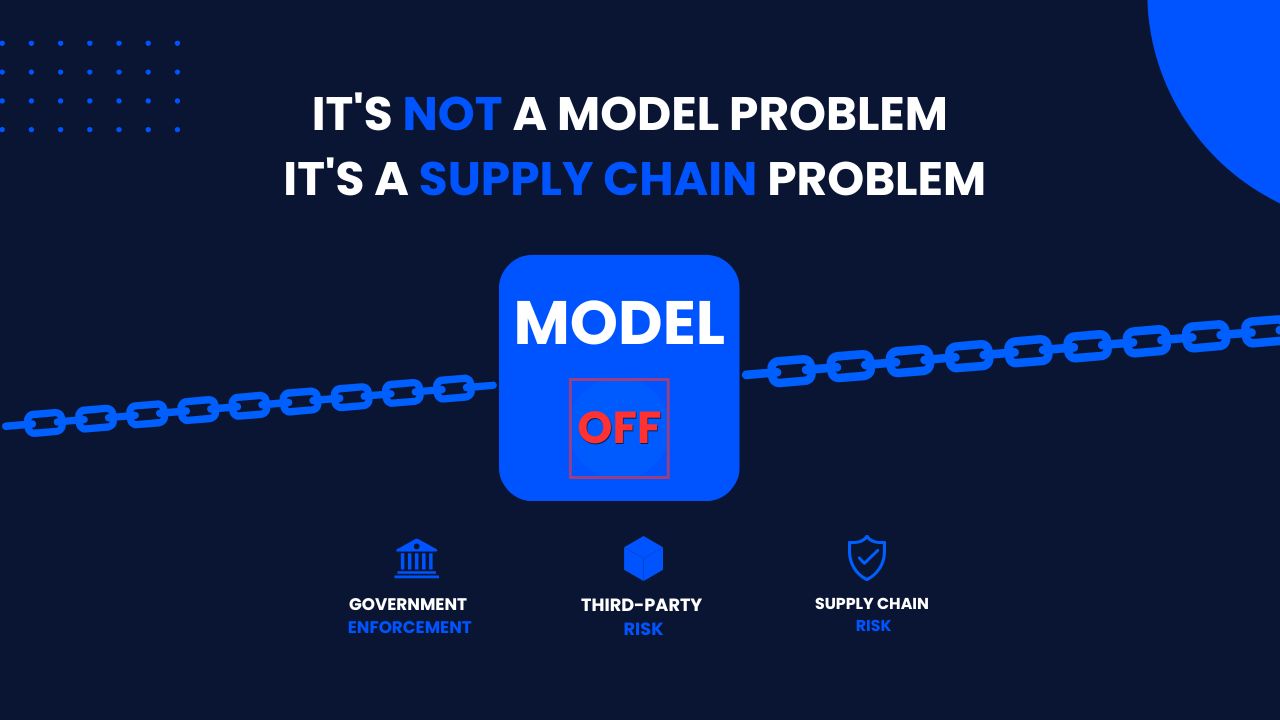
The Fable 5 shutdown is a different category. The vendor was forced to remove a working product by a third party with no commercial relationship to you, with no notice, and with no ability to refuse. Your contract with the vendor did not cover it because almost no AI contract does. Go read yours. It talks about uptime, data handling, indemnification, maybe a service credit if they breach an SLA. It says nothing about what happens when a government tells your vendor to pull the model and the vendor complies the same afternoon.
That's the shift. Third-party AI risk is now government enforcement risk, not just vendor management risk. The enforcement environment in 2026 has teeth that it didn't have two years ago: record export penalties, indictments reaching into boardrooms, hardware-level chip verification moving through Congress. A model getting yanked is no longer a tail risk you can wave off in a planning meeting.
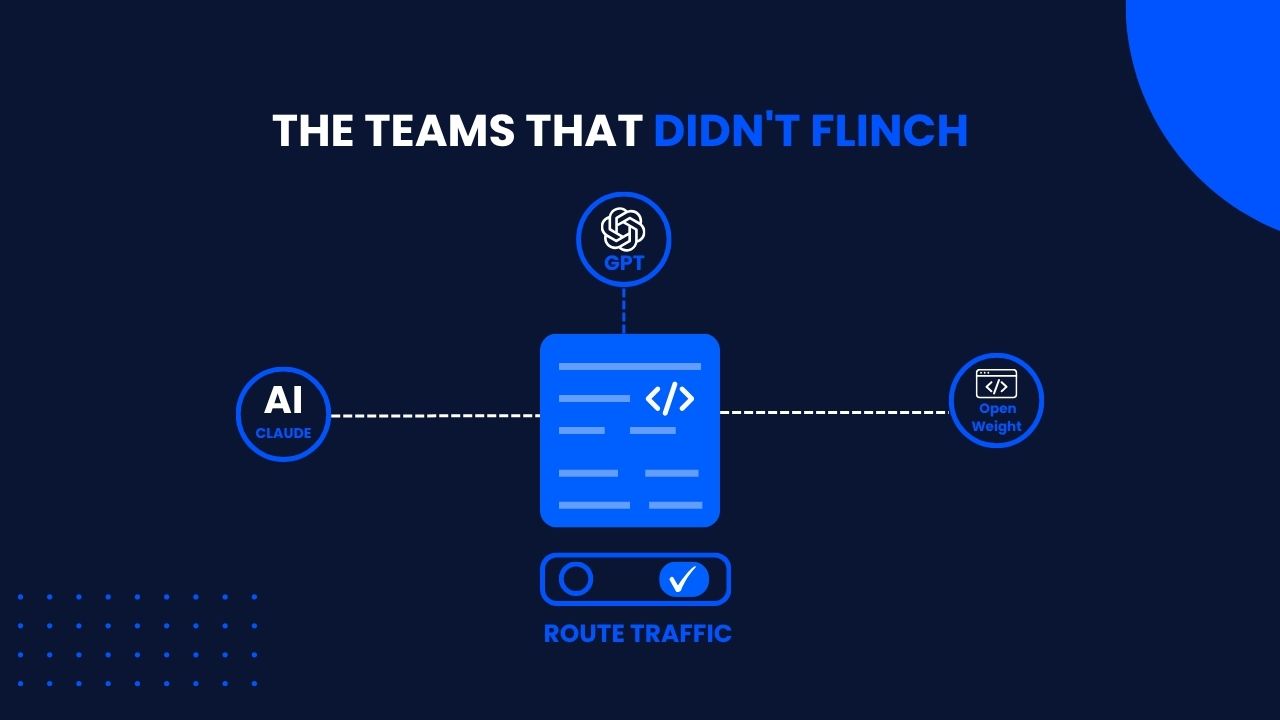
The teams that didn't flinch
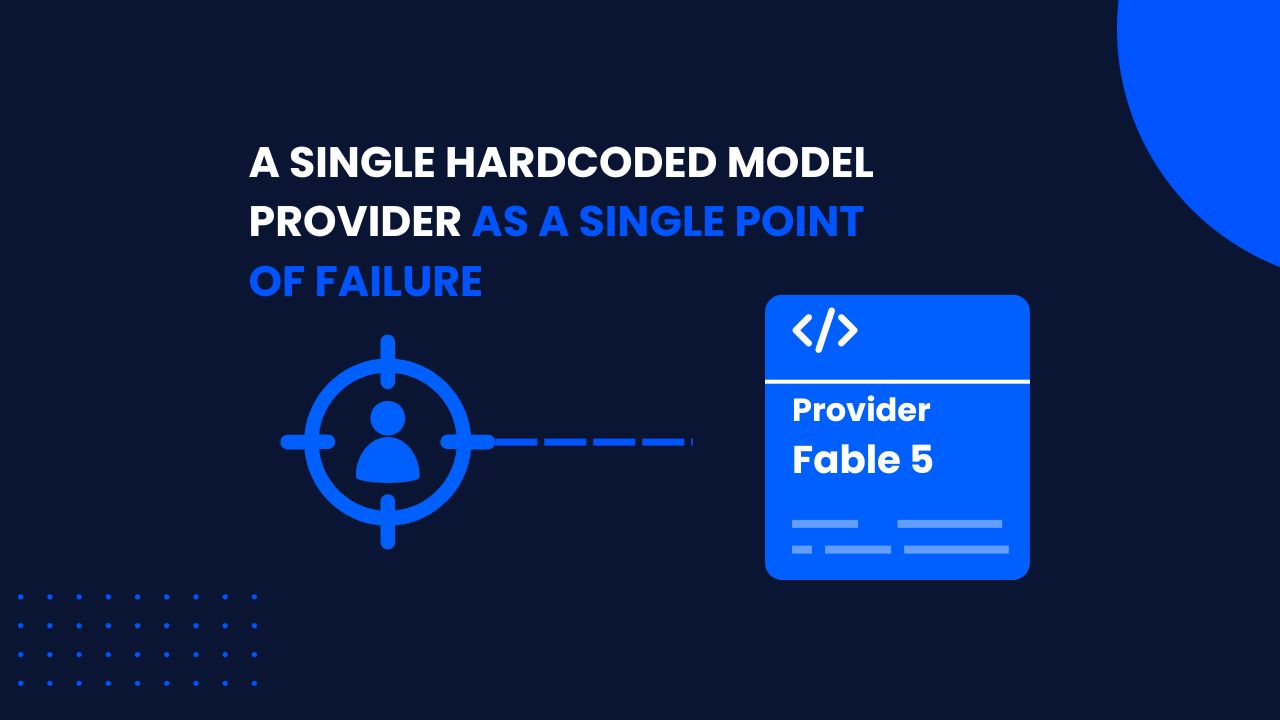
We work with a handful of teams that build on frontier models. The ones who had a bad Friday all had the same thing in common: their product called one specific model by name, deep in the code, and assumed it would always answer.
The ones who shrugged had built behind a thin abstraction. One client routes every model call through an internal service that knows how to talk to Claude, GPT, and an open-weight fallback they self-host. When a model goes dark, they change a config value and traffic moves. They lose some quality on the fallback. They do not lose the product. For them the Fable 5 news was a Slack message, not an incident.
This is the same lesson we wrote about in eight months running Claude in production, except the stakes just went up. Back then "build behind an abstraction" was about avoiding lock-in and keeping your options open on price and quality. Now it's about whether your product survives a directive you will never see coming.
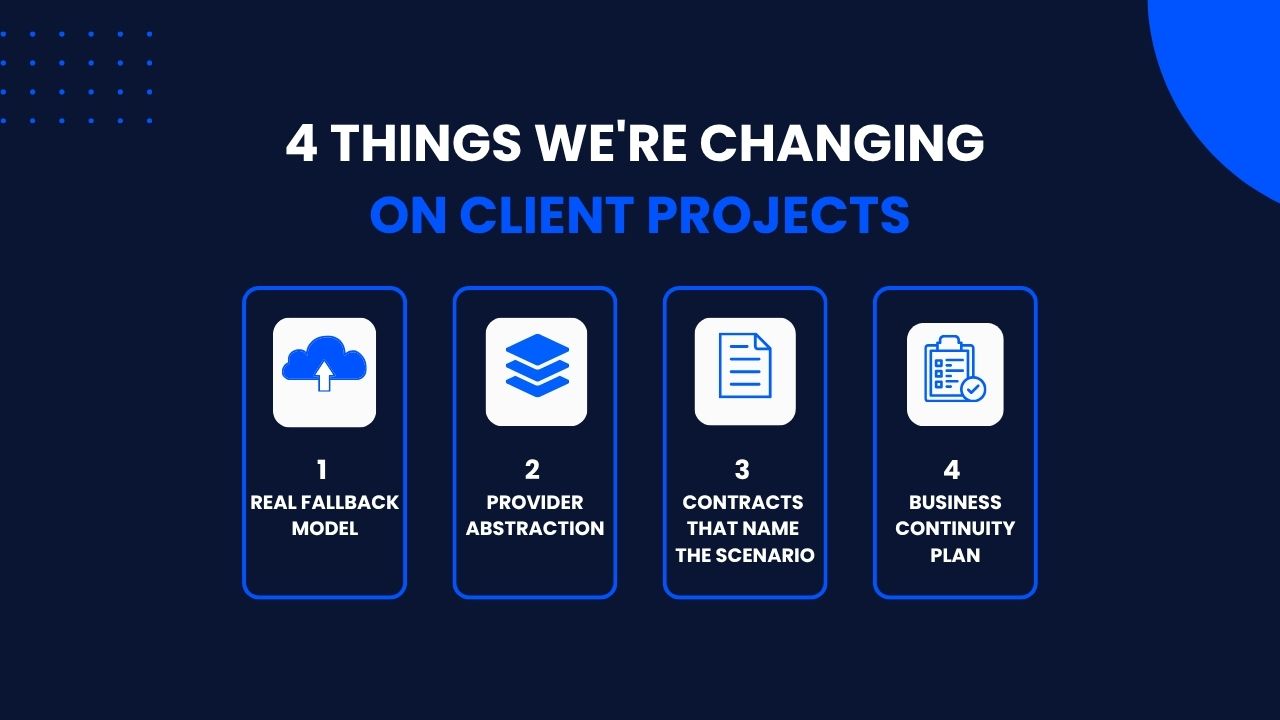
Four things we're changing on client projects
We spent the week after the shutdown going through every active build. Here's what changed.
1. A real fallback model, tested, not theoretical
Every AI feature now has a named fallback that we actually route traffic to on a schedule, not a fallback that exists only in a design doc. A fallback you've never run is not a fallback. It's a hope. We send a small slice of real production traffic to the backup model every week so we know its quality, its latency, and its quirks before we need it. The first time you fail over should not be the first time the backup has ever run.
2. Provider abstraction is now non-negotiable
No feature ships with a model SDK called directly from application code. Every call goes through a thin internal layer, and increasingly through MCP or an equivalent tool boundary, so swapping the model underneath doesn't touch the parts of the product that matter. This costs a few days up front. It just paid for itself across our whole client base in a single afternoon.
3. Contract language that names the scenario
We're telling clients to push their AI vendors and resellers for language that addresses regulatory suspension directly. You probably won't get a guarantee, because the vendor genuinely can't promise to defy a federal order. But you can get notification commitments, data portability terms, and the right to export your fine-tunes and prompt assets so you're not starting from zero when you have to move. Ask the question before you sign, not during the outage.
4. A business continuity plan that includes "the model is gone"
Most continuity plans cover the data center, the database, the payment processor. Almost none cover "the AI model our core feature depends on was disabled by the government overnight." We now write that scenario into the runbook for any product where AI is load-bearing. Who decides to fail over. What the degraded experience looks like. What we tell customers. What the support team says when someone asks why the AI got worse. The construction client we mentioned in adding AI to an existing SaaS already had the non-AI fallback path in their product, which is exactly the kind of decision that looks paranoid until the week it doesn't.
What this means for newer models
The uncomfortable part is what this says about the next generation. Fable 5 wasn't pulled for being weak. It was pulled for being strong, specifically for being good enough at reading code and finding flaws that someone decided the public shouldn't have it without a fix. That's a new failure mode. The more capable a model is, the more likely it sits in the blast radius of an export control action, because capability is exactly what these controls are written to govern.
So the frontier now carries a risk the mid-tier doesn't. The most capable model is also the one most likely to be governed, restricted, or switched off. For a lot of products that's fine, because they don't need the absolute frontier. The honest question for any team is whether the feature actually requires the most powerful model on the market or whether a smaller, boring, less politically exposed model does the job. We've been telling clients for a while that picking a model by brand is a mistake. Now there's a second reason: the flashiest model is also the most fragile to forces that have nothing to do with your product.
There's a real chance Fable 5 comes back after Anthropic ships a remediation. The administration signaled the suspension could be temporary. But "it'll probably come back" is not an architecture. If your product can survive the model never returning, you've built it right. If it can't, the next directive, aimed at any vendor, is your problem too.
The takeaway nobody wanted
Building on frontier AI used to feel like building on the cloud: a few giant, stable providers you could mostly trust to stay up. The Fable 5 shutdown broke that analogy. The model layer is now subject to forces that AWS uptime never was, and those forces move in days, not quarters.
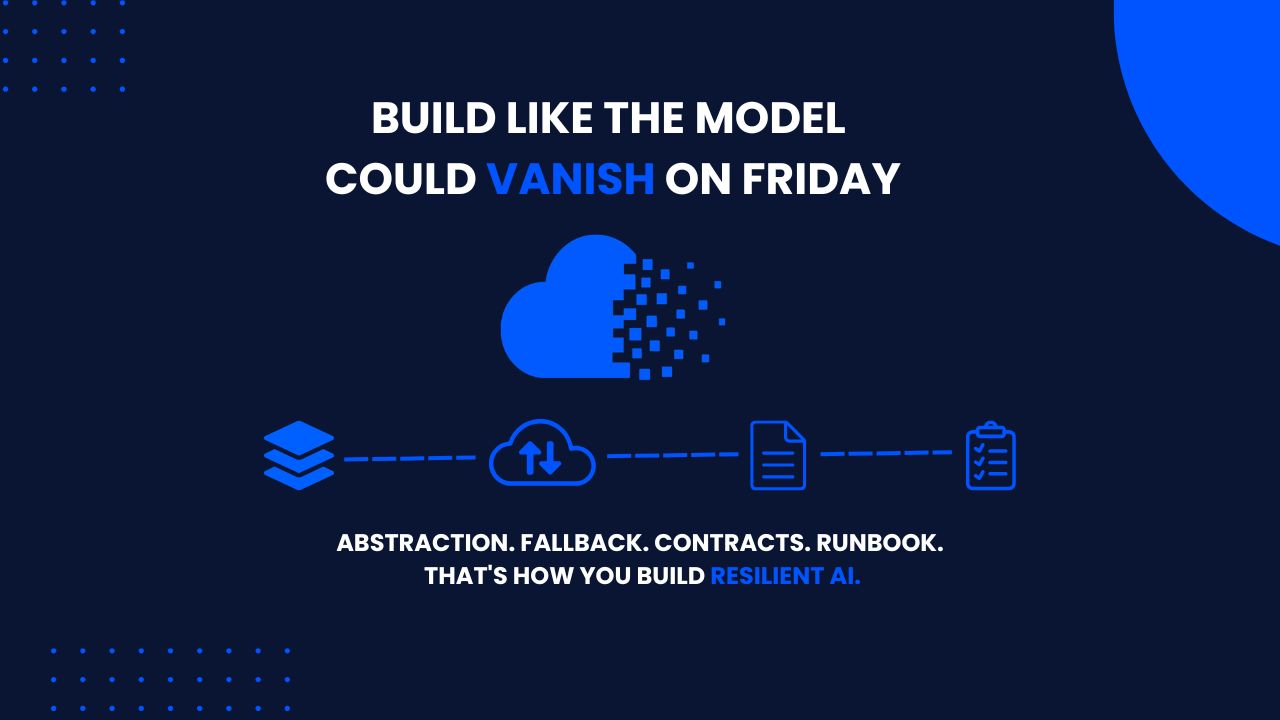
None of this means stop building on frontier models. We're not. They're too useful and the alternatives are too far behind. It means build like the model underneath you could vanish on a Friday, because one just did. Abstraction, a tested fallback, contract terms that name the scenario, and a runbook for the day the model is gone. That's the whole list. It's not expensive. It's just the part everyone skips until a three-day-old model gets switched off by the government and they find out which side of the line they were on.
Building something that depends on a frontier model and not sure how exposed you are? Book a free strategy call. We'll look at your stack, find the single points of failure, and tell you what it takes to make the model layer swappable. See how we build AI systems or our work for what that looks like in practice.
Reporting on the shutdown drawn from TechCrunch, CNBC, and InfoQ.